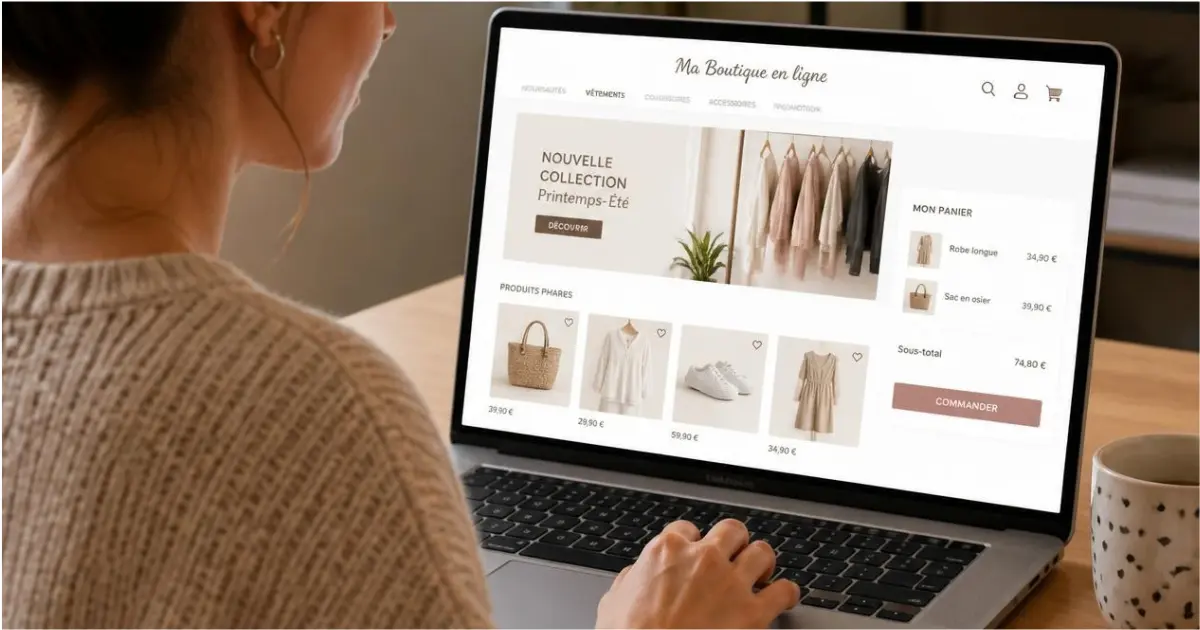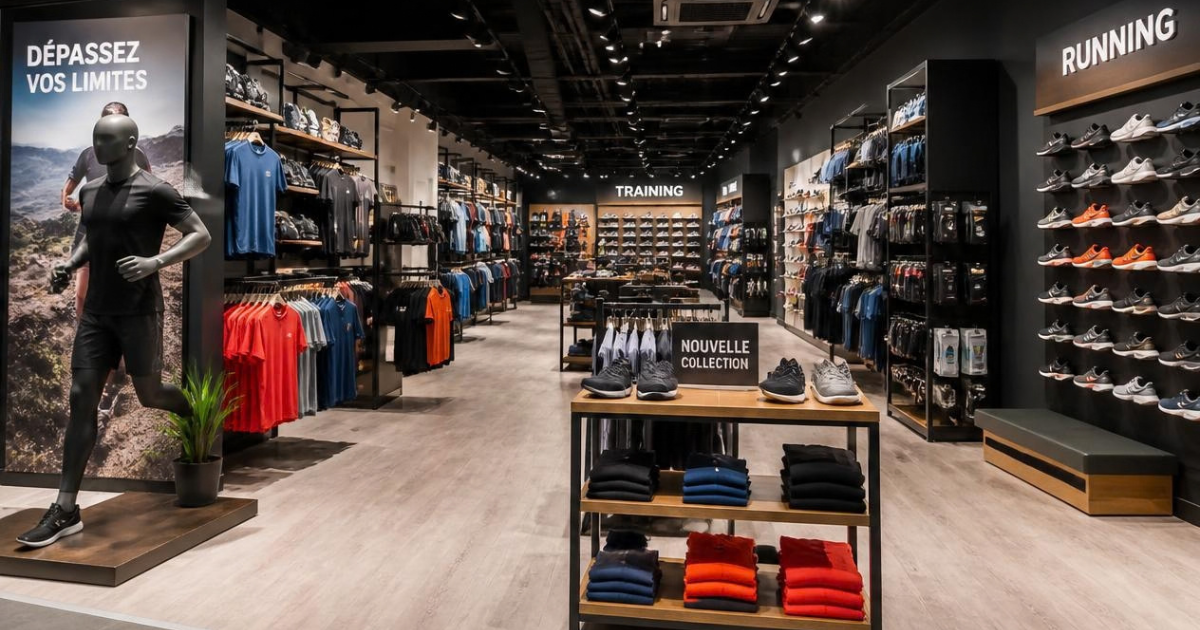

Delivering a premium experience no longer relies solely on store staff. It also requires the POS software, inventory management, e-commerce, and customer data analysis to operate seamlessly within a single ecosystem. Without this integration, friction arises, undermining both operational efficiency and brand perception. That is why luxury retail brands need POS software capable of interconnecting all their processes to guarantee a consistent omnichannel journey. In this article, we explain how a unified commerce approach improves employee productivity / efficiency, empowers in-store teams, and strengthens customer loyalty.
Why POS software is now the heart of luxury retail
Luxury brands need all their stores to operate as a unified, connected network regardless of country, sales channel, or boutique format. To achieve this, POS software has become a cornerstone of their technological stack, bridging in-store operations with the broader retail ecosystem. Key capabilities include:
- Real-time stock visibility and available inventory management.
- Centralized management of points of sale, touch terminals, and users.
- Seamless integration with ERP, Customer Relationship Management (CRM), e-commerce, OMS (Order Management System), and payment method / option solutions.
- Adaptation to different markets (currencies, languages, tax regulations, and country compliance).
- Support for omnichannel journey services and unified commerce.
As a result, POS software goes far beyond handling the checkout experience—it serves as the core hub connecting each boutique to the brand's global operations.
The challenge for luxury brands: sustaining a premium experience in the physical channel
A luxury point of sale must deliver flawless service, even as product references, sales channels, markets, and store counts multiply. However, many brands still rely on siloed applications, manual workflows, or customer data fragmented across disparate platforms.
This fragmentation leads to noticeable friction for the customer:
- Lack of accurate information regarding stock accuracy for specific items.
- Extended wait times at checkout or during order management.
- Difficulties recognizing customers across the digital channel and physical channel.
- Discrepancies in pricing management, discounts and promotions management, or commercial terms.
- Complex returns / refunds when an item was purchased online or through a different channel.
In the luxury sector, such disruptions do more than harm operational efficiency: they degrade the sense of exclusivity, trust, and tailored attention associated with the brand.
Technology must deliver a seamless experience by eliminating these friction points without making the customer journey impersonal. The goal is not to replace the human relationship between the Sales associate and the customer, but to empower store staff with the data and tools needed to offer personalized shopping experiences.
Key features of POS software designed for the luxury sector
To support complex store operations, POS software tailored for fashion and luxury must offer features capable of handling seasonal collection rotations, high-value merchandise, international commerce, and connected management across all channels. To achieve this, the solution must provide:
- Real-time stock visibility.
- Order management and returns / refunds across all channels.
- API-First integration with ERP, Customer Relationship Management (CRM), e-commerce, OMS (Order Management System), and payment platforms.
- Centralized pricing management and commercial rule configuration.
- High scalability to seamlessly integrate new store locations, markets, or brand divisions.
Efficient inventory management
In an exceptional boutique, ensuring stock accuracy for every single item is critical. The Sales associate must be able to locate products in other stores, warehouses, or fulfillment centers to suggest alternatives without interrupting customer consultations. With fashion-focused POS software connected to inventory management, the store can effortlessly coordinate services such as eReservations, Click & Collect, or Ship from Store, uniting all physical locations under a single store inventory framework.
Centralized pricing management
End-of-season sales demand fast, consistent updates for pricing management and discounts and promotions management across every market. Dedicated POS software allows retailers to deploy these updates from a single platform while respecting country-specific pricing, sales channels, and collection rules. Centralized management minimizes operational errors, accelerates commercial execution, and maintains total control over store inventory and pricing strategy consistency.
The empowered Sales associate: technology serving in-store teams
In luxury retail, the Sales associate plays a pivotal role in shaping the purchasing journey. Providing access to unified data within a single interface allows them to deliver a faster, more tailored, and highly effective service.
Mobile POS and frictionless purchasing journeys
A connected mobile POS solution enables staff to complete transactions anywhere on the sales floor, eliminating unnecessary back-and-forth and streamlining the checkout experience. It also facilitates the launch of agile pop-up stores, corners, and private events while staying fully integrated with payment method / option systems, inventory management, and country compliance rules to ensure operational consistency.
Clienteling and 360-degree customer view
Personalization relies on instant access to real-time information. Thanks to deep integration between POS software, Customer Relationship Management (CRM), and backend systems, the Sales associate can easily review purchase histories, preferences, and past interactions while adhering to data privacy regulations. This customer data analysis empowers precise product recommendations, fosters a seamless experience between digital channel and store interactions, and deepens customer loyalty to the luxury brand.
Unified commerce in the luxury store: connected POS and inventory
Unified commerce goes beyond displaying consistent branding across touchpoints: it ensures that physical stores, e-commerce, store inventory, and order management operate through fully interconnected workflows.
Leveraging this architecture, a luxury brand can deploy high-value services such as:
- Online purchasing with in-store Click & Collect.
- In-store returns / refunds for web orders.
- Assisted sale in-store with Home Delivery or fulfillment from another boutique.
- Real-time consultation of available inventory across the entire network.
- Store fulfillment for e-commerce orders.
- Continuity of customer purchase history and service excellence across channels.
To fulfill this promise, POS software must natively communicate with ERP systems, OMS (Order Management System), e-commerce platforms, Customer Relationship Management (CRM), and payment method / option solutions. A Cloud-native, modular, API-First architecture accelerates digital transformation while overcoming the rigid constraints of a legacy system.
The result: reinforced loyalty and brand reputation in luxury retail
Customer loyalty in luxury retail does not depend solely on product quality. It is forged through trust, active listening, and the ease with which clients interact with the brand.
By interconnecting all systems, store staff gain rich customer context, inventory management is optimized, and a seamless experience across the omnichannel journey becomes a reality. Together, these elements deliver a premium customer journey free of unnecessary delays or friction.
Furthermore, employee productivity / efficiency and operational excellence directly enhance brand reputation. A boutique capable of locating a rare item, completing an international order, or processing returns / refunds effortlessly projects absolute mastery. Technological performance emerges as an invisible yet essential pillar of the customer experience.
How to choose the right POS software for your luxury brand
Selecting a solution should not rely solely on current features. Retailers must evaluate how the software integrates into their IT infrastructure and its scalability to support future expansion.
Before making a decision, key criteria must be evaluated:
- Integration capabilities with the existing software ecosystem.
- Scalability to effortlessly open new stores and enter new markets.
- Centralized multi-brand, multi-country, and multi-format management.
- Comprehensive coverage of the entire omnichannel journey.
- Ergonomic usability and intuitive adoption for the in-store Sales associate.
- Flexibility to adapt and integrate new capabilities over time.
- Security, uptime, and maintenance of the Retail SaaS platform.
- The complexity of coexisting with or replacing a legacy system.
At Orisha Commerce, we assist retailers in connecting their point of sale (POS) with their broader operational framework through solutions designed for unified commerce. Within this offering, Openbravo POS enables brands to manage in-store operations, integrate POS software with other retail ecosystem solutions, and deploy a scalable model tailored for international organizations.
For a brand looking to modernize its boutique network without sacrificing the personalized essence of its service, the next step is analyzing current workflows, integration requirements, and the omnichannel services needed to enrich the customer journey. Contact Orisha Commerce to discover how Openbravo POS can be tailored to your business strategy.
Frequently asked questions about POS software in luxury retail
Can POS software integrate with a legacy system? Yes, provided it features a modern architecture and powerful API-First integrations. This enables the new POS software to coexist seamlessly with existing ERPs, Customer Relationship Management (CRM) platforms, e-commerce sites, inventory management tools, and other legacy applications, avoiding costly and unnecessary rip-and-replace projects.
What is the difference between fashion-specific POS software and generic POS software? POS software tailored for fashion must natively manage size/color matrices, collection rotations, seasonality, cross-channel returns / refunds, distributed store inventory, and store-specific workflows. In luxury retail, it must also include advanced clienteling capabilities to deliver personalized shopping experiences.
How does POS software support international expansion? A centralized Retail SaaS platform simplifies opening new points of sale by natively managing multiple languages, currencies, country compliance, and payment method / option preferences. It also harmonizes processes and functional capabilities across markets while retaining centralized control over global operations.
Does unified commerce require replacing all existing systems? Not necessarily. Implementation can be approached progressively by connecting the POS software to existing core systems via APIs. The optimal strategy depends on your current software architecture, retail priorities, and process complexity.